Buying Better
Why one bottle costs €5 and another €30
Two bottles can carry the same extra virgin label and sit far apart on price. Here is where the money actually goes, and when paying more is worth it.
By Olive Curious · Published 12 October 2026 · 6 min read
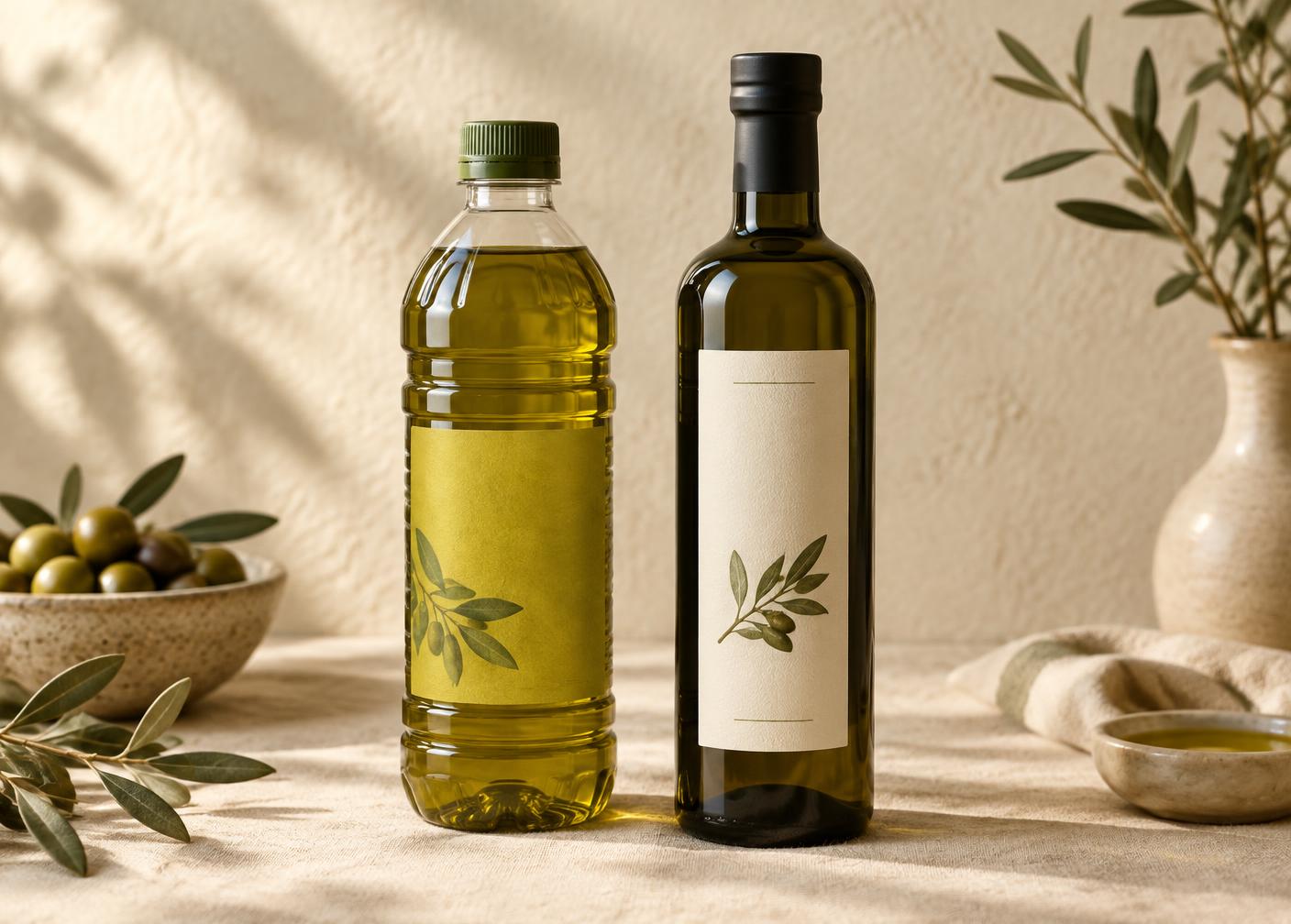
You can buy a litre of olive oil for less than a takeaway lunch, or pay three or four times that for a bottle half the size. Both can say extra virgin on the label, and neither explains the gap. It looks arbitrary until you follow the money through the grove, the mill and the shelf.
What the cheap end is actually selling
Oil at the lowest prices is made at enormous scale. Fruit is bought in bulk from many growers, picked over long harvest windows, hauled to large mills and processed around the clock. Blending evens out the differences between lots so every batch tastes the same. The whole system, from harvest timing to storage tanks, is engineered around volume and cost.
There is nothing dishonest about it. It is a different product made for a different job, and its price sits close to that of seed oils because the cost structure allows it. What you give up is freshness and character: the fruit is often older by the time it is milled, the oil is neutral by design, and it has usually spent weeks in tanks and tankers before it reaches the bottle.
Where the extra money goes
At the other end of the shelf, the costs are different at every step:
- Olives picked earlier in the season, when flavour and polyphenols are at their highest. Early fruit gives less oil per kilo, so the same grove produces fewer litres and every litre carries more of the cost of growing the trees.
- Speed from tree to mill. Fruit milled within hours of picking costs far more to organise than fruit that waits days in crates, and it is the single biggest factor in how clean and fresh an oil tastes.
- Smaller volumes. A producer making a few thousand bottles has none of the economies of scale of a factory making millions, and pays more for everything from glass to freight.
- Packaging that protects the oil. Dark glass and tins cost more than clear plastic, and they exist to keep light away from something worth protecting.
- Shorter, more careful logistics. Small lots travel less and sit less, but each leg of the journey costs more per litre.
None of these costs guarantees a better oil on its own, but together they explain most of the gap between a supermarket basic and a bottle from a single estate. The expensive oil is not simply priced up because of a nice label; it is usually made in a way that cannot be done cheaply.
Price is a clue, not a verdict
That said, a high price does not settle the question. Some bottles are expensive because of marketing rather than milling, and a costly oil left in a clear bottle on a sunlit shelf is a bad buy at any price. The label still does the work: a harvest date, an origin, a named variety and a producer who tells you how the oil was made are worth more than any number on the shelf edge.
Compare bottles by the litre rather than by the unit, because sizes vary widely. A 500ml bottle that looks pricey may work out cheaper per litre than the big tin next to it. And remember that freshness is part of the value: an oil harvested this year at a fair price usually beats a prestigious name from last season, because olive oil only goes one way after it is made.
When to spend and when to save
The simplest rule is to match the oil to the job. For frying, roasting and baking, where the flavour is diluted by heat and other ingredients, a straightforward extra virgin at the lower end does everything you need. Cooking with olive oil costs less than most people assume, because you use less of it than butter or most other fats anyway.
Spend the real money on the bottle you use raw. Salads, soups, bread, vegetables and anything finished at the table are where fruitiness, bitterness and that peppery catch actually reach you, and where the difference between an ordinary oil and a great one is obvious in the first spoonful. One good bottle used raw will teach you more about olive oil than a cupboard full of average ones.
If you are starting out, you do not need the most expensive bottle in the shop. You need a recent harvest, sensible packaging and a producer or retailer who tells you something true about what is inside. From there, price becomes what it should be: one factor among several, instead of the whole decision.