The Essentials
What 'extra virgin' actually means
Extra virgin is a defined grade, not a marketing adjective. A short, plain explanation of what has to be true for an oil to use it.
5 min read
Learn
Four topics, written to answer the questions people actually ask in the supermarket aisle and at the stove.
Start here
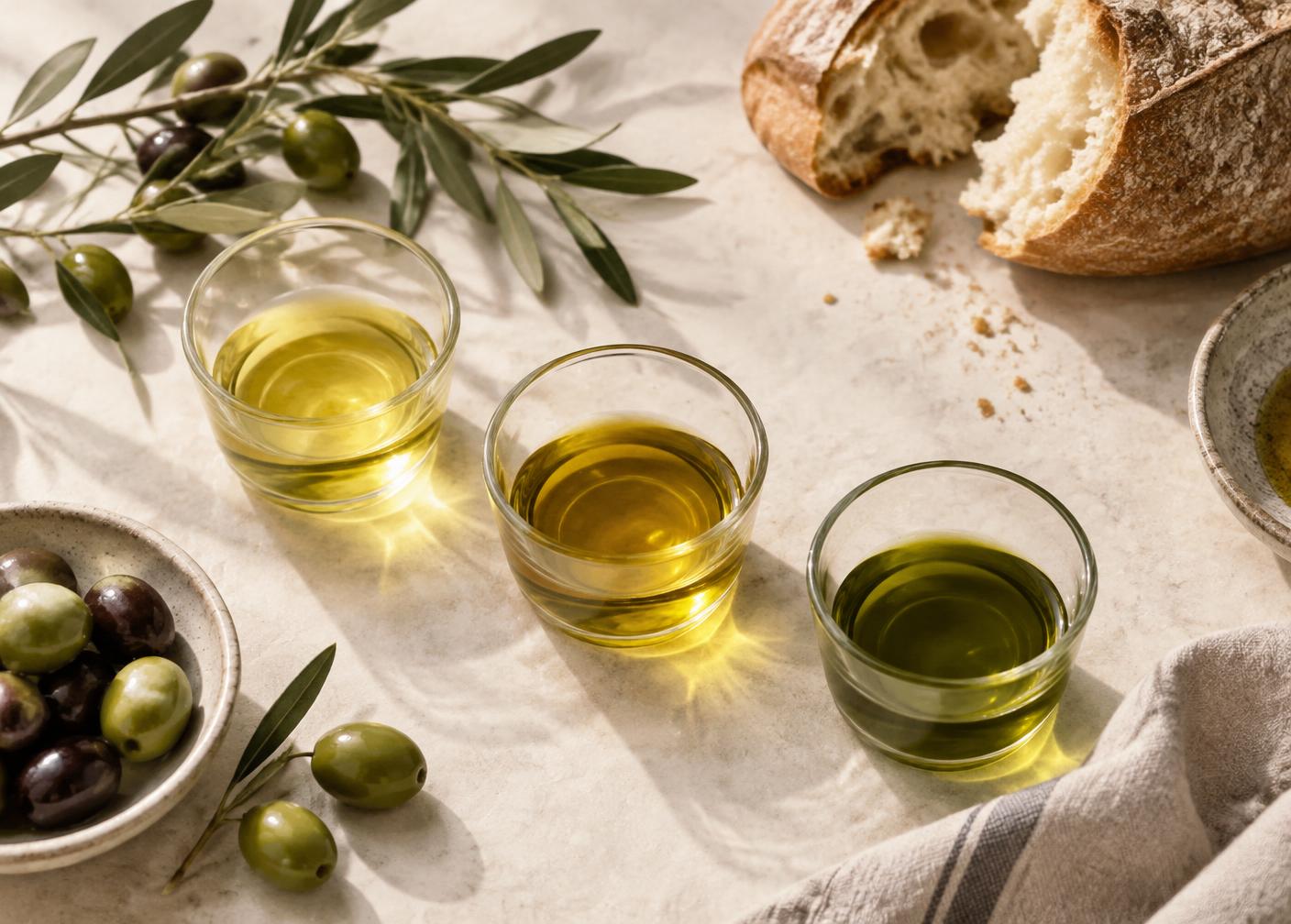
Green oil is not automatically better oil. Here is what colour does and does not tell you, and what to look at instead.
Read the guideWhat extra virgin actually means, and the few facts worth knowing before you shop.
Extra virgin is a defined grade, not a marketing adjective. A short, plain explanation of what has to be true for an oil to use it.
5 min read
Reading labels, judging price, and spotting the things that genuinely matter.
Green oil is not automatically better oil. Here is what colour does and does not tell you, and what to look at instead.
4 min read
Price and quality are related, but not the way most shoppers assume. How to spend sensibly on the bottle you use every day.
4 min read
The five things worth finding on a label, in the order they matter, and the phrases that carry no real information.
6 min read
How olive oil is supposed to taste, and how to keep a good bottle good.
Light, heat, air and time are the four things that spoil a good bottle. Simple habits that keep an oil tasting the way it should.
6 min read
Bitterness and a peppery throat catch are features, not faults. A short guide to tasting an oil and describing what you find.
6 min read
Heat, smoke points and the everyday cooking questions people keep asking.
You can cook with extra virgin olive oil. Its smoke point matters, but it does not tell the whole story of what happens in a hot pan.
5 min read
Browse the selection and see how the things you have just read show up on a real bottle.